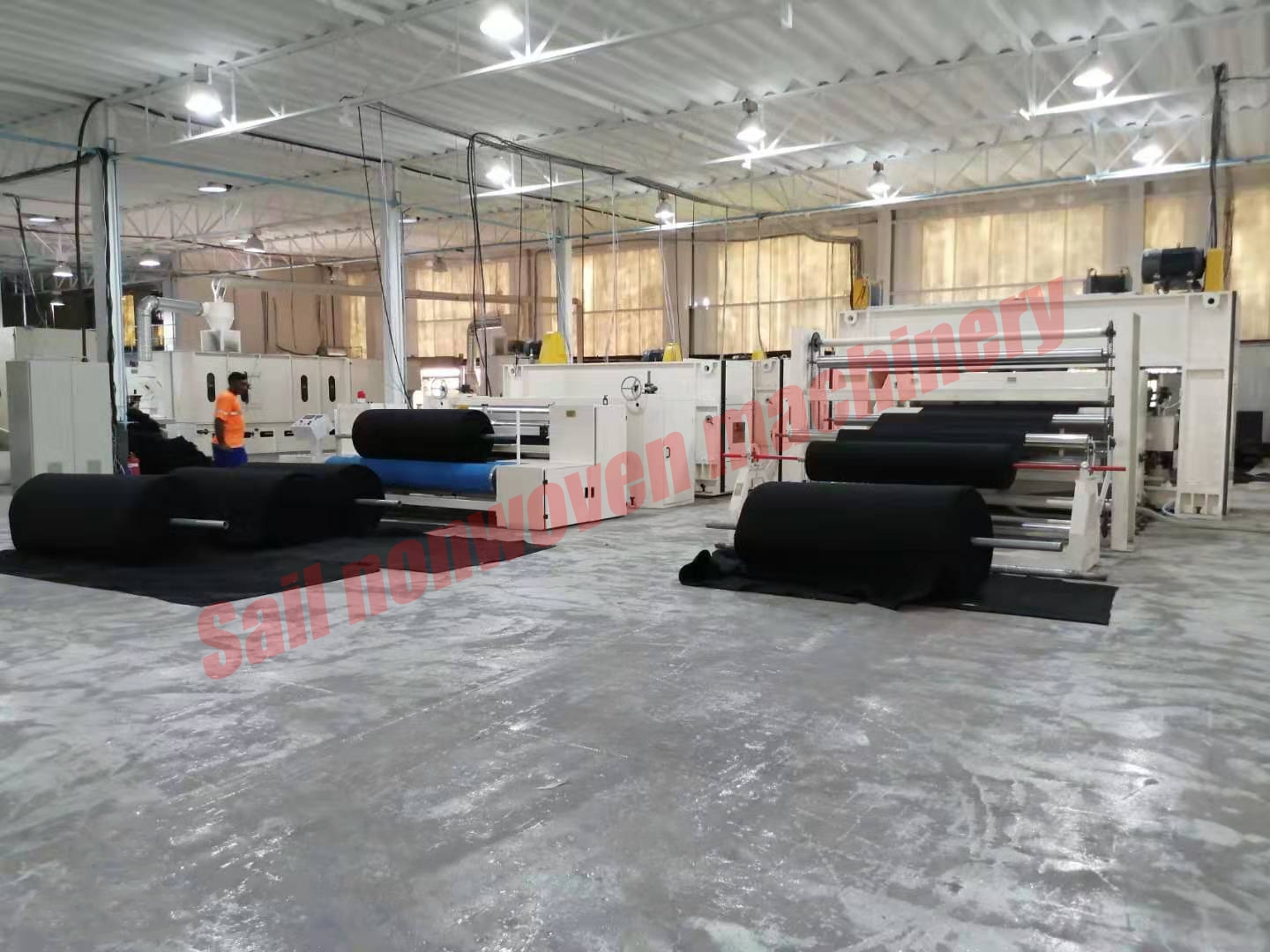
Sail’s Recommendations: Essential Nonwoven Fabric Manufacturing Equipment
A procurement-ready checklist of nonwoven manufacturing equipment, with module-by-module FAT and acceptance points.

Buying nonwoven equipment isn’t about collecting individual machines. It’s about building a production system that can run predictably—at your target GSM, tensile profile, and defect tolerance—while staying supportable for years (spares, documentation, training, and service response).
This guide lays out Sail’s recommended essential nonwoven fabric manufacturing equipment across the full process, with a decision-stage focus: what to put in scope, what to verify in RFQs, and what to require in FAT before you release shipment.
Key Takeaway: Procurement risk is usually created by missing scope, weak acceptance criteria, and incomplete documentation—not by a single “bad machine.” Treat the line as an integrated, testable system.
What counts as essential nonwoven fabric manufacturing equipment
“Essential” depends on your product family, but for industrial nonwovens the equipment scope typically maps to seven blocks:
Opening & preparation (fiber opening, cleaning, and consistent feed)
Blending & storage (repeatable recipes and stable throughput)
Feeding (uniform mass flow into web formation)
Web formation (carding + web layering/formation)
Bonding (mechanical and/or thermal bonding depending on end-use)
Finishing & converting (stabilize the fabric, then slit/wind into saleable rolls)
Controls, safety, and documentation (what makes the line operable and auditable)
In decision-stage sourcing, your job is to convert these blocks into:
a module-by-module scope list (what’s included vs. by others)
measurable acceptance checks (what “pass” looks like)
a documentation package that prevents commissioning delays
If you’re building your RFQ around one phrase, make it this: nonwoven fabric manufacturing equipment that’s complete, testable, and supportable.
Upstream: opening, blending, and needle punching production line equipment prep
1) Fiber opening equipment
For staple-fiber lines, opening is foundational. Sail’s configurations commonly start with openers such as bale and fiber openers as part of complete line scope for needle punching applications (see Sail’s Needle Punching Production Line category page).
What to specify in the RFQ
Raw material types and constraints (virgin/recycled, denier/cut length ranges, contamination sensitivity)
Required throughput stability (target range, ramp-up expectation)
Dust and waste handling responsibilities (in scope vs. by others)
What to verify in FAT
Safe access/guarding and interlocks around rotating parts and feed zones
Consistent feeding behavior at multiple setpoints (no surging that will later show up as GSM variation)
Maintainability: tool access, wear parts, and cleaning points
2) Blending and storage equipment
If your products use blends (or you expect future product variants), blending and storage become “essential” quickly. Sail lists fiber blending and storage machines as part of its equipment ecosystem for nonwoven production.
What to specify in the RFQ
Recipe handling (how many recipes, changeover expectations)
Storage and buffering needs (how the line behaves during upstream disturbances)
What to verify in FAT
Repeatability of blend handling during recipe changes
Traceable settings: the HMI/PLC should record setpoints and alarms in a way operators can actually use
3) Hopper feeder / feeding equipment
Sail commonly includes hopper feeding modules in needle punching line scopes.
What to specify in the RFQ
Feed width compatibility with carding infeed
Control method and sensors (so operators can keep feed stable without constant manual tuning)
What to verify in FAT
Stable feed across operating ranges
Alarm behavior and safe stop sequence (no material “dumping” into downstream modules)
Web formation: carding and cross-lapping (and when to consider air-laid)
4) Carding machine
Carding is a key web-forming step in many nonwoven processes. In Sail’s needle punching line descriptions, the carding machine appears as a standard module.
What to specify in the RFQ
Working width and target web weight range
Quality targets that matter for you (uniformity, fiber orientation expectations, defect tolerance)
What to verify in FAT
Alignment and mechanical build quality (vibration, unusual noise, and access for cleaning)
Control and safety behavior: guarded zones, interlocks, emergency stop response
5) Cross lapper (web layering)
For products requiring loft, thickness, or multi-layer structure, cross-lapping is often essential. Sail commonly lists cross lappers as part of complete needle punching line scope.
What to specify in the RFQ
Product thickness/structure targets and allowable variation
Changeover and recipe stability expectations
What to verify in FAT
Stable layering behavior at different speeds
Operator usability: recipe switching, alarms, and recovery after stoppages
When an air-laid module makes sense
Sail also lists air-laid as a web formation option for certain configurations. If you are considering air-laid, treat it as a separate web-forming technology decision and require the supplier to define:
what materials are supported
what upstream prep is required
what quality risks and controls are typical
Bonding: needle punching vs. thermal bonding (how to scope it)
Bonding is where “essential equipment” diverges most by end-use. Two common industrial routes are needle punching and thermal bonding.
6) Needle punching (needle looms)
Sail’s needle punching production line sequences include needle punching machines after web formation (carding and cross-lapping).
What to specify in the RFQ
Your end-use and the performance envelope (GSM range, tensile targets, thickness targets, and the test methods you will use)
Scope boundaries: number of needle looms, configuration intent, and how the line handles different product families
What to verify in FAT
Functional sequences and safety: start/stop logic, interlocks, guarding
Stability during speed changes and stop/restart behavior
Evidence you can audit: FAT protocol + signed report + punch list closure process
7) Thermal bonding module (ovens / thermal lines)
Thermal bonding lines are relevant when low-melt fibers or thermal recipes are part of your product design. If this is your route, treat the thermal section as a distinct piece of thermal bonding nonwoven production line scope (utilities, controls, and safety). Sail lists thermal-bonding production lines and also includes ovens as equipment categories.
What to specify in the RFQ
Heating method and utilities assumptions (the supplier should clearly list required utilities and responsibilities)
Control philosophy: temperature zones (if applicable), recipes, and alarm handling
What to verify in FAT
Safety and compliance posture for heating equipment
Controls behavior: setpoint handling, alarms, safe shutdown
Maintainability: access for cleaning and inspection
⚠️ Warning: Thermal processes often shift TCO toward energy and maintenance. Make utilities and maintenance requirements explicit in the scope and acceptance plan.
Finishing and converting: calendering, stenter, and nonwoven slitting and winding machine requirements
8) Calendering / ironing
Calendering is commonly used to stabilize thickness, improve surface finish, or set certain properties. Sail’s needle punching lines frequently include a calender machine before winding.
What to specify in the RFQ
Target finishing outcomes (what needs to change in the fabric—surface, thickness stability, handling)
Integration and controls (how calender settings are stored and repeated)
What to verify in FAT
Stable control response to setpoint changes
Safety controls and guarding
9) Stenter (when coating/heat-setting is in scope)
For certain end uses, finishing can require coating, drying, or heat setting. Sail describes stenter machines for such applications.
What to specify in the RFQ
Whether coating/drying/heat-setting is in scope for your products (don’t assume)
Upstream/downstream handling and quality checkpoints
What to verify in FAT
Functional runs and safe stop sequences
Documentation that defines the process window and operating limits
10) Slitting and winding
A line isn’t “complete” if you can’t convert output into consistent saleable rolls. In RFQs, treat this as the nonwoven slitting and winding machine scope (not an afterthought). Sail lists slitting and winding machines as part of its equipment categories for nonwoven production.
What to specify in the RFQ
Final roll width range, core sizes, roll hardness expectations, and defect tolerance
Traceability requirements: labeling and roll identification practices
What to verify in FAT
Winding stability and tension control across your expected roll sizes
Defect handling and edge quality expectations
Controls, safety, and utilities: what must be in scope
If you want a procurement-ready line, treat controls and safety as equipment—not “nice-to-haves.”
Minimum requirements to put in writing
PLC/HMI scope, I/O lists, and alarm philosophy
Interlocks, guarding, emergency stops, and safe access points
Utilities list (power, compressed air, heat media) with responsibility split
Training scope: operators and maintenance
If you ship into jurisdictions requiring formal conformity documentation, require the supplier to provide a clear documentation package and explain scope and responsibilities.
Nonwoven machinery FAT checklist: procurement artifacts to request
Decision-stage buyers should insist on four artifacts—before shipment.
1) Scope confirmation (module list + responsibilities)
The supplier should provide a module-by-module scope list identifying what is included and what is “by others.” That list should align to the PO/RFQ.
2) FAT protocol with pass/fail criteria
FAT shouldn’t be a tour. It should be a written protocol with measurable checks.
At minimum, your nonwoven machinery FAT checklist should cover:
Mechanical alignment and build quality
Electrical wiring/labeling/grounding
Safety systems (guarding, interlocks, E-stops)
Functional sequences (start/stop, alarms, recovery)
Trial run plan and sampling plan for fabric verification
Punch list process (document issues, correct, re-test)
3) Documentation package
Require an auditable package:
FAT report (signed)
As-built mechanical and electrical drawings
Operation and maintenance manuals
Recommended spare parts list (critical vs recommended)
Training plan and commissioning plan
4) Spares, service, and escalation plan
The fastest way to protect uptime is to plan for supportability.
Request:
a critical spares list with suggested on-site quantities
service response expectations and escalation contacts
operator and maintenance training scope
How Sail maps to this “essential equipment” framework
Sail positions itself as a supplier of complete nonwoven lines with customization and after-sales support. For decision-stage procurement, the useful question is not “do you have a machine,” but “can you configure, deliver, and validate the full process scope for my product family?”
Where Sail’s published scope aligns well with a procurement checklist:
Complete line module coverage for needle punching configurations, including opening, feeding, carding, cross-lapping, needle punching, calendering, and winding
Process examples and line compositions shown in Sail’s video hub, useful for aligning internal stakeholders on module scope
Broader product overview for scoping discussions at Sail’s products catalog
Pro Tip: In early supplier conversations, share your product performance envelope and ask for a proposed module list plus a draft FAT protocol. If the supplier can’t make those concrete, it’s a signal the project risk will land on your team.
Next steps (decision-stage)
If you’re preparing an RFQ or validating a supplier configuration, a fast, procurement-friendly workflow is (built specifically for nonwoven fabric manufacturing equipment projects):
Document your product family + performance envelope + raw material constraints.
Convert the process into a nonwoven production line equipment module list (in scope vs by others).
Require a FAT protocol with pass/fail criteria before shipment.
Lock documentation, training, and spares into the commercial package.
If you want to align your line scope with a procurement-ready checklist, start with a configuration discussion with Sail. Use the Sail site as a starting point, then request: (1) a module list, (2) a draft FAT protocol, and (3) a recommended critical spares package for your nonwoven fabric manufacturing equipment scope.